Walmart Marketplace Management
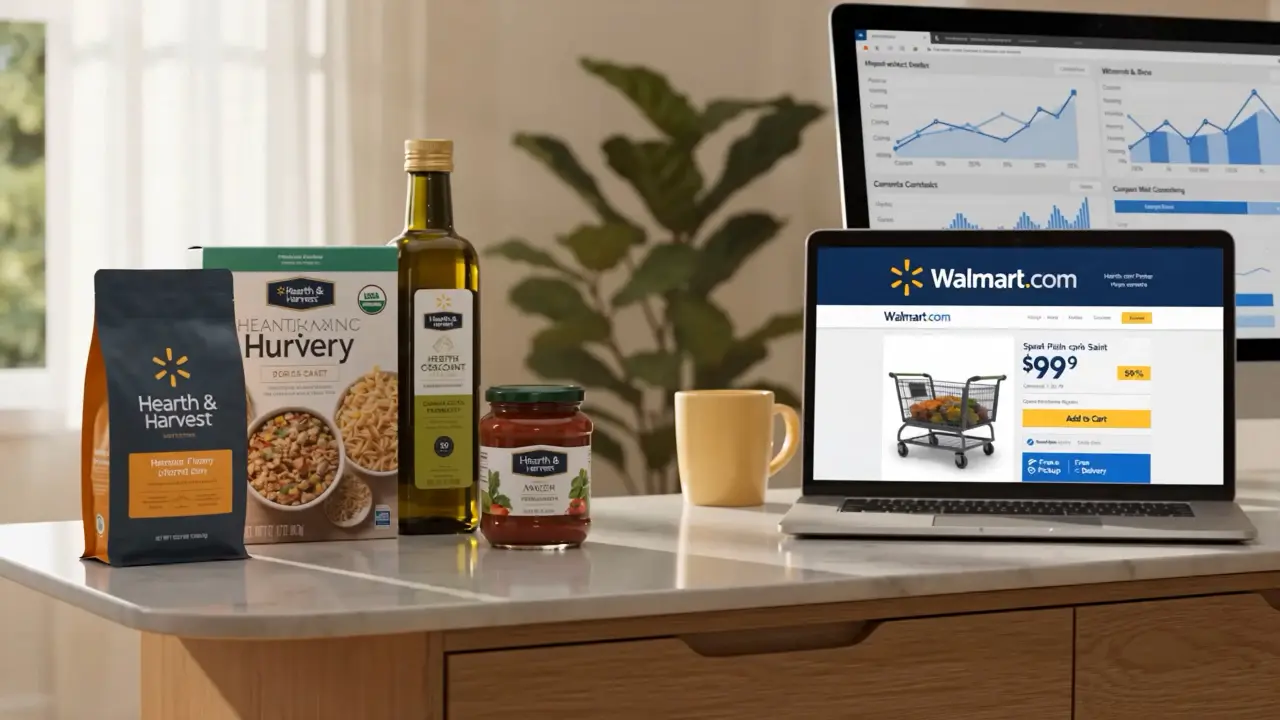

Walmart Marketplace: America's Second-Largest Ecommerce Opportunity
While Amazon dominates ecommerce headlines, Walmart.com has quietly built the second-largest online marketplace in the United States. With over 150 million unique monthly visitors and the trust of value-conscious shoppers nationwide, Walmart represents a massive growth opportunity for brands looking to diversify beyond Amazon.
What makes Walmart particularly attractive is lower competition compared to Amazon. Many categories have fewer sellers competing for Buy Box placement, and advertising costs remain significantly lower. For brands with strong price-value propositions, Walmart's customer base aligns perfectly with messaging around quality at accessible prices.
Walmart success requires platform-specific expertise that differs fundamentally from Amazon. Our specialists understand Walmart Fulfillment Services (WFS) intricacies for Buy Box optimization, Walmart Connect advertising dynamics including lower CPCs and distinct shopper intent patterns, and omnichannel coordination between online marketplace and in-store programs. Our comprehensive Walmart management approach integrates marketplace operations with data-driven advertising strategies that consistently achieve 2.8x average ROAS.
Walmart Marketplace Services


Walmart Connect: Retail Media's Hidden Gem for Performance Marketers
Walmart Connect - Walmart's retail media network - has emerged as one of the highest-performing advertising platforms for brands willing to test beyond Amazon. With search ads, display placements, and sponsored products reaching shoppers across Walmart.com and the Walmart app, Connect offers sophisticated targeting with considerably less competition than Amazon Advertising.
Our approach to Walmart Connect advertising starts with understanding the platform's unique characteristics. Walmart shoppers typically have different search behavior and conversion patterns compared to Amazon. They're often planning full shopping trips rather than single-item purchases, which means basket building and complementary product recommendations matter more.
We've developed advanced bidding strategies for Walmart Connect that account for the platform's auction dynamics, seasonal patterns, and competitive landscape. Our clients average a 2.8x ROAS on Walmart Connect campaigns, with many categories achieving superior performance due to lower competition and cost-per-click rates. Our iDerive platform surfaces actionable insights that enable real-time bid optimization based on inventory availability, conversion patterns, and profitability thresholds.
FAQ
To get approved on Walmart Marketplace, you need a US business entity, US tax ID, US-issued business address, US-based inventory or fulfillment, and a track record on another eCommerce platform like Amazon, Shopify, or BigCommerce. Walmart prefers brands with established eCommerce history. Pure first-time sellers face more scrutiny. The application takes 2–4 weeks and includes verification of UPCs, product imagery, and a category-fit review. Approval rates jumped after Walmart opened the marketplace more aggressively in 2023; today most legitimate brands with existing channels get approved within a month.
Walmart’s price parity rule suppresses your listing from search results when Walmart’s algorithm detects the same SKU priced lower elsewhere. Amazon, your DTC site, Target, anywhere indexed. Suppression typically happens within 24 hours and lasts until pricing is corrected or matched. The fix isn’t to hide your other-channel pricing; it’s to keep prices roughly equivalent across channels, or to use Walmart-exclusive bundles, sizes, or variants that don’t have a direct off-Walmart comparison.
WFS (Walmart Fulfillment Services) is Walmart's equivalent of FBA. Store inventory in Walmart fulfillment centers, get 2-day delivery badging, automated returns processing. Pricing is roughly comparable to FBA on per-unit fulfillment ($3–$8 depending on size/weight), with WFS storage fees about 20% lower than FBA. Where WFS lags: smaller fulfillment network (fewer FCs, slower delivery to remote ZIPs), thinner returns ecosystem, less mature seller tooling. Most multi-channel brands run WFS for Walmart-only inventory and keep FBA for Amazon, splitting inventory rather than running everything through one channel.
$30–$50/day per campaign for the first 30 days, same statistical-significance math as Amazon. Walmart's overall ad market is about 1/10 the volume of Amazon's, which means CPCs are lower (typically 30–50% under Amazon for comparable categories) but available impression volume is also smaller. For a brand with $20K/month in Walmart sales, a $1,500–$3,000/month ad budget is the right starting range. Scaling above $10K/month in Walmart Connect spend without Walmart-specific creative and category data usually delivers diminishing returns.
Mechanically similar but with material differences. Both use keyword targeting, second-price auctions, and ad placement on search results pages. Where they diverge: Walmart's keyword match types are simpler (exact and phrase only, no broad), Walmart's auction rewards higher CTR more aggressively (so creative quality matters more), and Walmart's first-page ad inventory is thinner. Brands that lift their Amazon SP playbook directly into Walmart often over-bid on broad-equivalent keywords (which don't exist) and under-invest in CTR optimization. The right approach is to treat Walmart Connect as its own discipline, not a copy of Amazon.
Because Walmart's algorithm crawls competing marketplaces and DTC sites, then suppresses your listing if your Walmart price isn't the lowest available. Common triggers: Amazon Subscribe & Save discount makes your Amazon price effectively lower, your DTC site has a sitewide promo running, or a third-party seller is undercutting you on another marketplace. The suppression notification doesn't always tell you which competitor triggered it. Fix: use Walmart's pricing report to identify the comparison, then either match your Walmart price or change variant SKUs to break the comparison.
Sponsored Search for direct conversion intent (shoppers searching for products like yours). Lower CPC, better attribution, easier to optimize. Onsite Display for awareness/consideration plays where you want top-of-mind among shoppers in your category, even those not actively searching. Onsite Display CPMs are higher but reach is broader. Most brands under $500K monthly Walmart revenue should be 80%+ on Sponsored Search with minimal Display. Brands over $1M monthly start adding Display for category SOV defense and competitive conquest.